

Research Centers
CARE-ADD
Introduction
The Centre for Advanced Research & Excellence in Autism and Developmental Disorders (CARE-ADD) is a multi-disciplinary research centre that aims to trac the biological underpinnings of Autism and related developmental disorders, while also exploring cost-effective interventions. The translational output includes the development of tools & technologies for early detection and intervention for Autism and related developmental disorders; and the future plans are to develop scalable models of care for public health in the State. We also envisage developing nationwide research networks and training a wide variety of professionals.
Description
Basic and Translational Research: The centre will conduct foundational research in genomics, brain studies and child behaviours. The goal is to uncover the myriad complex relationships among genetics, brain circuitry and behaviour by developing computational models exploiting the advancements in Artificial Intelligence/Machine learning (AI/ML) approaches, leading to a better understanding of Autism.
Research and services at CARE-ADD come together with the shared vision of incorporating a multi-modal approach, learning from the astute observations of parents and responding to their needs.
CARE-ADD invites families to participate in clinical research.
Clinical Services: The centre will provide screening, assessments, therapy, education and parent training-programmes to address current issues. The interventions will be tailored to the specific needs of the children. For details on our clinical services, CLICK HERE.
CARE-ADD envisions the development of early identification and intervention models that can be replicated across secondary public health centres within the state. These models will be based on its current approach to clinical services. We are implementing the ComDEALL model of early intervention (individual and group based) on one hand, while also addressing other needs through routine outpatient care models.
Developing Networks and Training Professionals: CARE-ADD aims to collaborate with research centres across the country to facilitate knowledge sharing and transfer amongst professionals working in shared areas of research. A Fellowship Model is being developed along with collaboration projects in many other specialised centres. A long-term goal is to offer specialised training programmes to equip a variety of health-professionals across the state, to deliver early identification and intervention services.
Phone: 080-25526365 - Please leave messages with Mr. Sandesh
Email: info.careadd@stjohns.in
Research at CARE-ADD
Research at CARE- ADD In our effort to learn more about Autism and related developmental disorders as well as develop useful strategies for the future, CARE-ADD invites families to participate in our clinical research. Participation in research-based evaluation involves no cost to families. Their participation is not connected with the services they receive at this centre. Formal Informed Consent process as mandated by our Institutional Ethics Committee will be followed. It is pertinent to point out here that many neurological conditions that were deemed untreatable (such as Lysosomal Storage disorders, Duchenne Muscular Dystrophy, Spinal Muscular Atrophy etc) are now having newer therapeutic options based on careful research in large number of subjects and their families. We strongly believe that having data (behavioural and cognitive, blood based including genetics, electro / neurophysiological measures such as EEG and MRI) from a large number of children / adults with autism and their families and collaborating with professionals from a variety of backgrounds would help us understand autism better and lead to development of treatment protocols in the future. Such developments are likely to benefit the wider autism community in the years to come. Data sets from other countries may vary significantly from that obtained from families in India and it is imperative to eventually draw conclusions from our own data
Here are the details of some of the ongoing studies at CARE-ADD
1. Genetic exploration of children with ASD and their parents: It is important to understand the function of genes and the molecular pathways that can impact bodily processes and brain functions leading to clinical features of autism. The identification of genetic markers can help bridge the knowledge gaps and provide useful information and aid early diagnosis of ASD in infants. Early detection is the key to helping any child with autism or related developmental disorders in order to reach their potential. High risk groups like children with siblings diagnosed with autism, children born with obstetric risk faction and eventful birth with postnatal complications should be monitored by physicians and families. Recruitment Requirements: For the genetic study, CARE-ADD seeks blood samples from children and families. Stringent blood draw protocols are followed for the same. The use of anaesthetic cream makes the procedure as near painless as possible.
2. Autism, autistic traits and other broad development outcomes in a cohort of children with well characterized placenta and birth data from SJMCH: The principal aim of this study is to associate placental histopathology and placental biomarkers with developmental outcomes by systematic screening and follow up of the children delivered at St. John’s Medical College Hospital. We are not inviting participants - as this study is a follow up study of those already recruited for another study in the pathology department
3. Play Behaviour in Autism: Using play as an early diagnostic screening tool enables clinicians, parents and caregivers the opportunity to evaluate dyadic social interactions and overall play behaviour that may indicate risk for autism. CARE-ADD is exploring play behaviours with a goal to design computational predictive models for screening and diagnosis of autism in infants and toddlers. Recruitment requirements: CARE-ADD seeks participants aged 12-42 months for the Play Behaviours study. Children with ASD and typical children will be recruited.
4. Proof of Concept Study to test the BubbleMind - soothing app for children with ASD BubbleMind is a mobile & tablet-based application which incorporates all sensory features (audio, visual and touch). This is a completely novel study with possible benefits to the society to act as an easy access immediate intervention for children, with minimal support from caregiver/parents/teachers. Recruitment requirements: Children of ages 4-7 years with ASD are invited to participate in this study. The participant is required to continue using the app for a period of 3 months at home. A follow-up assessment will be done after a period of 3 months.
5. Modifying and Validating the ScreenPlay app, a tool for screening children for autism in child The current study intends to explore the validity of an app-based screening tool, ScreenPlay, from Kidaura Innovations. This tool is based on motor coordination aspects that are being increasingly recognized in the area of Autism. We intend supporting the further finetuning of this tool to become capable of discriminating autism from normal children and children with other developmental disorders and confirm its validity in the said groups. Recruitment Requirements: Children between ages 3 and 6 are invited to participate in the study. Children with ASD, developmental disorders other than ASD and typically developing children will be recruited for the study.
6. Obstetric factors and Autism: A multi-centre exploratory case-control study: In children and adolescents with Autism Spectrum Disorders (ASD) it is yet to be clearly determined if complications during pregnancy can contribute a primary risk for development of ASD or affect the genes of the child during pregnancy. We wish to obtain a profile of these pregnancy related events and/or complications from four centres in the country. Recruitment Requirements - April 2021 to July 2021. Children with ASD and typically developing controls will be recruited. Families will be asked to share the pregnancy and birth details of their child along with reviewing records related to the same.
7. Exploring the ongoing impact of coronavirus pandemic on families who have individuals with autism: Recruitment for this study is closed
8. Autism in children with Cerebral Palsy (CP) Early identification of autism features in children with CP has probably not been explored in young children in India and internationally. Determining methods of early identification can change the model of early intervention in this group of children with CP. This study will determine challenges of diagnosing ASD in children with CP and those with sensory motor deficits using qualitative methods. In this study, we intend to identify motor deficits in infants who screen positive for ASD (SP- ASD) and determine neurobiological underpinnings of the same using EEG and MRI based connectivity analyses.
The study has two phases.
- Phase 1 - Clinical assessments and evaluation,
- Phase 2: EEG and MRI investigations will be done twice across the year to explore the neural correlates of emerging symptoms.
Recruitment Requirements - March 2021 to November 2022 Children at risk for CP and/or ASD with age between 12 to 24 months are invited to participate in the study. Detailed physical, medical and neurological assessment will be done. EEG and MRI investigations will be done in natural sleep. Children will have to undergo a follow - up assessment, EEG and MRI 1 year after the first investigation. 9. Teenage and Young Adults Programme: There are very few assessments that give a comprehensive picture of the life of the adult individual with ASD tapping into all their characteristics, skills and needs which includes communication and interpersonal skills, educational level, decision making and problem solving, flexibility and ability to prioritize, mental health or behavioural challenges, ability to ask for help, motivation, interests, and other skills. The existing literature, though scarce, indicates the lack of adequate services to help teenagers and young adults with ASD. This lack of services leads to these individuals not receiving help after their school life. This further escalates to problems like lack of employment, social life, and ability to lead an independent life. We at CARE-ADD intend to do a comprehensive assessment for individuals in this age-group and attempt addressing their needs as part of this operational research study. This study will be done in two phases. Phase 1 will involve in depth clinical assessments at the CARE-ADD centre (or online). Phase 2 will involve the use of Structured instruments and proformas to conduct assessments of the teenager and young adults with ASD in clinical as well as homebased contexts and community settings such as restaurants, transport terminals, parks and so on. Through these assessments, parent interviews and subsequent interviews of experts in the field, we intend to further develop a model of assessments and basic interventions for young adults with autism. Recruitment Requirements: Adolescents and young adults (over 14 years of age) diagnosed with ASD. 10. Parent Mediated Intervention in Autism – A preliminary study of parental needs, challenges and methods: Intervention in autism is a long-term process which requires 24-hour involvement to be effective. It is now recognized that active parent involvement leads to optimum outcome. We at CARE-ADD have undertaken a study to understand the status of parent mediated interventions in India. This is a qualitative study involving interviews of professionals from centres across India. We have finished this first phase and now are looking to recruit parents who have undergone parent mediated interventions. Recruitment Requirements: Parents of children with ASD between the ages of 6 to 20 years.
Clinical Services at CARE-ADD
Caring for a child with developmental problems like autism can be an everyday challenge. However, with early detection, parental education and intervention, parents can prepare themselves in an effective manner.
Customised Programmes:
CARE-ADD recognises that different children respond in different ways to intervention. No single programme can suit all children and families. So the team works towards customising the intervention programme to meet the needs of every individual child. Early Intervention: The team at CARE-ADD is equipped with the necessary tools and professional expertise to evaluate and assess a child as early as 12-18 months of age. The early intervention programme combines specialist support and intensive therapies. Follow up Programme: The centre offers a systematic follow-up programme for reassessment of children at regular intervals to monitor their progress.
Support Groups for Families: CARE-ADD conducts quarterly parent-support group meetings. These meetings create a sense of community on the basis of shared experiences and allow families to set realistic expectations of how mental health professionals can help their child. Besides this, it is an opportunity for them to receive updates on progress in research and programmes. A Repository of Approved Interventions: CARE-ADD seeks to build a repository of information on available interventions and resources for children and families in the city.
Youth and Young Adults with Autism: We intend developing a programme based on operational research design and support 15-20 youth and young adults with autism. It is envisaged that this will lead to a formal rehabilitation model that focuses as much on strength of these individuals, besides respite care where necessary.
For appointments, please call: 080-22065950 for autism clinic and 080-22065643 for assessments after having been seen in the clinic.
Phone: 080-25526365 - Please leave messages with Mr. Sandesh
Email: info.careadd@stjohns.in
To know more about the teams at CARE-ADD CLICK HERE
To view the CARE-ADD Newsletter of June 2020, please CLICK HERE
To view the CARE-ADD Newsletter of December 2020, please CLICK HERE
To view the CARE-ADD Newsletter of June 2021, please CLICK HERE
To view the CARE-ADD Newsletter of August 2022, please CLICK HERE
To view the CARE-ADD Newsletter of March 2023, please CLICK HERE
To view the CARE-ADD Newsletter of September 2023, please CLICK HERE
To view the CARE-ADD Newsletter of December 2023, please CLICK HERE
To view the CARE-ADD Newsletter of March 2024, please CLICK HERE
To view the CARE-ADD Newsletter of June 2024, please CLICK HERE
To view the CARE-ADD Newsletter of September 2024, please CLICK HERE
To view the CARE-ADD Newsletter of December 2024, please CLICK HERE
To view the CARE-ADD Newsletter of April 2025, please CLICK HERE
To view the CARE-ADD Newsletter of August 2025, please CLICK HERE
To view the CARE-ADD Newsletter of December 2025, please CLICK HERE

Dr. Vijaya Raman
Centre Head
I am the Professor of Clinical Psychology in the Department of Psychiatry. I work with children and adolescents. I have been with St. John's since 1996 and have been instrumental in starting the Child Psychology services as well as the Consultation Liaison services with Pediatrics. My areas of interest are Autism Spectrum Disorders, Children with chronic medical illness and its psychological ramifications, Anxiety in children and parental accommodation. I am also the Head of the Center for Advanced Research and Excellence in Autism and other Developmental Disorders (CARE ADD) in St. John's.

Dr. Aruna Korlimarla
Core Team
As a Core Member of CARE-ADD, Dr. Aruna spearheads the Genetics team and started molecular studies trying to understand underpinnings of Autism spectrum in children and aims to nominate molecular pathways for further interrogation and thus to link biological mechanisms with behaviour. At CARE-ADD, Dr. Aruna would also like to establish a large resource of clinical specimens from patients as well as parents to provide material for genetic research studies. The ongoing Biobank will comply with national and international guidelines and will be unique in having a pan India representation. She hopes that understanding the molecular underpinnings that lead to development of ASD diseases may help to devise methods for early detection which will help the patients come into mainstream at the earliest.
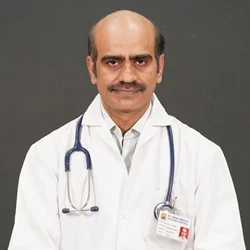
Dr. Shyam Rajagopalan
Core Team
Dr.Shyam is a computational scientist with an interest in the biological discovery of Autism Spectrum Disorder (ASD). His research background is in the computational understanding of human interactive behaviours using Computer Vision algorithms. He has strong experience in image and video analysis using AI/ML for understanding social interaction behaviour of children ‘at risk’ of ASD.
Dr. Beena Bhasan
Core Team
Consultant-Nurse( Led Early Intervention Programme)
Educational Qualifications M.Sc. (Psychiatric Nursing) NIMHANS, M.Phil. (Behavioural Sciences & Rehabilitation Nursing), Ph.D. (Rehabilitation Nursing)School of Behavioural Sciences Mahatma Gandhi University Kottayam Kerala.
.jpg.webp)
Dr. Suhas Chandran
Core Team
Associate Professor and Head of the Child and Adolescent Psychiatry Unit at St. John's Medical College Hospital, Bangalore, where he has served on the faculty for the past 8 years.
Dr. Meghana Vijayanand
Project
Consultant Clinical Psychologist
A clinical psychologist, does assessments and therapy for children with neurodevelopmental disorders.
Nisba Tasmin
Project
JRF (Social Worker)
Serves as a member of the Teenagers and Young Adults (TYA) with Autism team, supporting programs and services designed to improve the well-being of autistic adolescents, young adults, and their families
SANDESH. P
Project
Administrative Assistant
Sandesh assists the team in a range of administration related tasks.
Sathyalakshmi. P
Project
Early Intervention Specialist (Psychologist)
Member of the Special Education and Neurocognition Team at CARE-ADD
Supreetha Santosh
Project
Early Intervention Specialist (Speech Language Pathologist)
Member of the Special Education and Neurocognition Team at CARE-ADD
No active projects found.
No completed projects found.
| S.I. No | Title | Authors | Journal Name | Publication Year |
|---|---|---|---|---|
| 1 | SPECTRUM OF DE NOVO VARIANTS IN AUTISM: A TRIO STUDY FROM INDIAN FAMILIES | Durbagula Srividhya , Ashitha S.N.M., Snijesh V.P., Aruna Korlimarla, Ashok Mysore Visweswariah | European Neuropsychopharmacology | 2021 |
| 2 | Coping with autism during lockdown period of the COVID-19 pandemic | Kaku, Sowmyashree Mayur; Chandran, Suhas; Roopa, N.; Choudhary, Aakash; Ramesh, Jayashree; Somashekariah, Suchita; Kuduvalli, Sowmya; Rao, Vanitha S,Mysore, Ashok | Indian Journal of Psychiatry | 2021 |
| 3 | Utility of prolonged EEG in Autism Spectrum Disorder with and without epilepsy. | Sarma GRK Sowmyashree Mayur Kaku, Manjula William James, Ashok Mysore. | ResearchGate | 2020 |
| 4 | EEG based entropy measures in pre-school children with autism and other neurodevelopmental disorders during awake & sleep states | Abhijith Vasista , Sowmyashree Mayur Kaku , Manjula William James, Sarma GRK, Shyam Rajagopalan, Ashok Mysore | ResearchGate | 2022 |
| 5 | TH-274. Evaluation of spectral EEG Correlation Dimension as an early-stage biomarker for autism spectrum disorders in awake and sleep states. | Abhijith Vasista, Sowmyashree Mayur Kaku, Anoop Joseph, Manjula William James, Kukkuta Raja Gosala, Shyam Rajagopalan, Ashok Mysore. | Clinical Neurophysiology | 2022 |
| 6 | Global child and adolescent mental health perspectives: bringing change locally, while thinking globally | Sowmyashree Mayur Kaku, Jordan Sibeoni, Salah Basheer, Jane Pei-Chen Chang, Dulangi Maneksha Amerasinghe Dahanayake, Matias Irarrazaval, Jamie M Lachman, Boladale Moyosore Mapayi, Anilena Mejia, Massimiliano Orri, Tze Jui-Goh, Md Saleh Uddin, Inge Vallance | Child and Adolescent Psychiatry and Mental Health | 2022 |
| 7 | Investigating EEG Delta Band Differences in Preschool Children with Autism during Awake and Sleep Stages | Sowmyashree Mayur Kaku, Abhijith Vasista, Manjula William James, GRK Sarma, Shyam Rajagopalan, Ashok Mysore | Indian Journal of Psychiatry | 2022 |
| 8 | Prenatal epigenetic factors are predisposing for neurodevelopmental disorders—Considering placenta as a model | Srividhya Durbagula, Aruna Korlimarla, Gayatri Ravikumar, Snijesh Valiya Parambath, Sowmyashree Mayur Kaku, Ashok Mysore Visweswariah | Birth Defects Research | 2022 |
| 9 | Mental health of children with neurodevelopmental disorders during COVID-19: A brief report of family experiences from a low and middle income country | Sowmyashree M Kaku . | Clinical Child Psychology and Psychiatry | 2021 |
| 10 | Predictors of Outcome in Autism Spectrum Disorders: A Perspective for Clinicians and Therapists | Sowmyashree Mayur Kaku, Ashok Mysore | Indian Journal of Psychological Medicine | 2023 |
| 11 | Whole Exome Sequencing on a multiplex family of Indian origin identifies mutations at 17p11.2 in siblings with autism spectrum disorders: implications to understanding the pathophysiology from syndromic variants. | Durbagula , Sathyanarayanan Ranganayaki , Snijesh Valiya Parambath , Aparna H S, Aruna Korlimarla, Nishant Prabhakaran, Meghana Vijayanand, Naveen Kumar C Gowda | Research Square | 2023 |
| 12 | Extreme Sleep Spindles in Children with Autism Spectrum Disorder and Related Disorders—A Case Series | Sowmyashree Mayur Kaku, Manjula William James, Kukkuta Raja Gosala. | International Journal of Epilepsy | 2022 |
| 13 | Parent Mediated Interventions for Children with Autism across India: A Qualitative Study | Vanitha Rao, Nirupama Srikanth, Supriya Santosh, Sathya Lakshmi PS, Athira ND, Sowmya HR, Ashok Mysore, Vijaya Raman. | Journal of Indian Association for Child and Adolescent Mental Health | 2024 |
| 14 | Methods for Extended Sleep EEG Recording in Autism: A Sleep Deprivation–Based, Natural Sleep–Recording Protocol and Feasibility Study | Sowmyashree Mayur Kaku, Manjula William James, Elizabeth Vt, Ashok Mysore. | Journal of Indian Association for Child and Adolescent Mental Health | 2024 |
| 15 | Motor Skill Intervention in Autism: A Neglected Component | Athira ND, Vanitha S Rao, Nirupama Srikanth, Ashok MV. | Indian Journal of Psychological Medicine | 2024 |
| 16 | Occipital Localization of Electrocardiographic Artifacts in Pediatric Electroencephalograms: A Novel Observation and Implications | Gosala R K Sarma, Sowmyashree M Kaku, Manjula W James, Ashok Mysore. | Annals of Indian Academy of Neurology | 2024 |
| 17 | Whole Exome Sequencing of a Multiplex Family of Indian Origin Identifies Variants in the RAI1 and FLII Genes within the 17p11.2 Region in Siblings with Autism and Smith Magenis Syndrome | Durbagula Srividhya, Snijesh Valiya Parambath, Ranganayaki Sathyanarayanan; Aparna Huligerepura Sosalegowda; Aruna Korlimarla; Ashitha S. Niranjana Murthy; Nishant Prabhakaran; Meghana Vijayanand; Naveen Kumar Chandappa Gowda. | Molecular Syndromology | 2024 |
| 18 | Cognitive Profile of Children with Autistic Traits | Vanitha S Rao, Dr. Ashok MV | RGUHS Journal of Allied Health Sciences | 2024 |
| 19 | Exploring Gender Disparities in Autism Spectrum Disorder | Nishanth Prabhakaran, Sowmyashree Mayur Kaku, Anna Maria, Nirupama Srikanth, Vijaya Raman | Internation Society for Autism Research | 2024 |
| 20 | Evaluating Sleep in Autism Using CSHQ and CSHQ-Autism - A Perspective Through the Cultural Lens | Nishanth Prabhakaran, Sowmyashree Mayur Kaku, Anna Maria, Roopa N. | Journal of Autism and Development Disorder | 2024 |
| 21 | Genetic insights into male autism spectrum disorder in a small cohort of Indian simplex families: findings from whole exome sequencing | Durbagula Srividhya, Snijesh V.P., Ashitha Siddappa Niranjana Murthy, Meghana Rameshraju K, Chetan Ghati Kasturirangan, Gautham Arunachal Udupi, Nallur B Ramachandra, Aparna Huligerepura Sosalegowda, Vijaya Raman, Aruna Korlimarla, Naveen Kumar Chandappa Gowda. | General Psychiatry | 2024 |
| 22 | Efficacy and Safety of Apixaban Compared with Warfarin for Stroke Prevention in Patients with Atrial Fibrillation from East Asia: A Subanalysis of the Apixaban for Reduction in Stroke and Other Thromboembolic Events in Atrial Fibrillation (ARISTOTLE)Trial | Goto S, Zhu J, Liu L, Oh BH, Wojdyla DM, Aylward P, Bahit MC, Gersh BJ, Hanna M, Horowitz J, Lopes RD, Wallentin L, Xavier D, Alexander JH; ARISTOTLE Investigators | Am Heart J | 2014 |
| 23 | EEG spectral characteristics and asymmetry in pre-school children with autism in awake and sleep stages | Abhijith Vasista, Sowmyashree Mayur Kaku, Anoop Joseph, Manjula William James, Gosala R.K. Sarma, Ashok Mysore, Shyam Sundar Rajagopalan | Research in Autism, Volumes 121–122 | 2025 |
| 24 | Gastrointestinal Manifestations and Associated Comorbidities in Children with Autism Spectrum Disorder: A Cross-sectional Analysis from South India | Nishanth Prabhakaran, Sruthy Jestine, Ann Maria Moncy, Lakshmi Siva, Suhas Chandran. | Indian Journal of Psychological Medicine | 2025 |
| 25 | A Qualitative, multitiered operational research model for teenagers and young adults with autism: Actionable insights from an Indian context | Chandran, Suhas; Shetty, Harshitha; Mathew, Anjali1; Rao, Vanitha; Mysore, Ashok | Indian Journal of Psychiatry | 2025 |
| 26 | Psychosocial Support for Siblings of Individuals with Autism: Insights from a Scoping Review | Kaur S, Rao VS, Bhatia T, Chandran S | Indian Journal of Psychological Medicine | 2026 |
| 27 | Ayurveda, Homeopathy and other complementary treatments in the child and adolescent mental health: A critical review of emerging paradigms | Alvin J Joseph , Lakshmi Keerthana , Meghana Vijayanand and Suhas Chandran | Indian Journal of Mental Health and Neurosciences | 2025 |
No book chapters found.
No books found.
No other publications found.